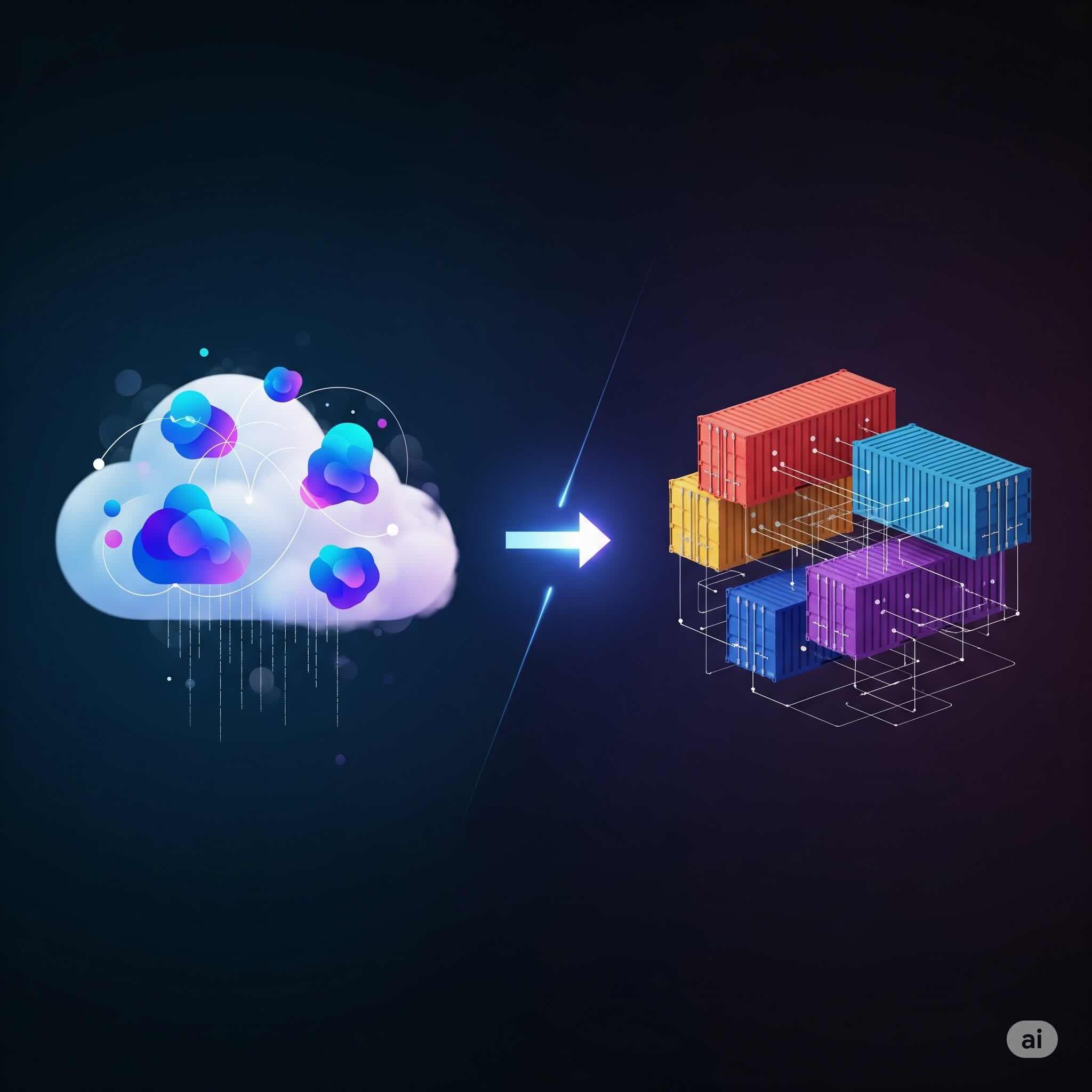
Serverless vs. Containers: Architectural Choices for AI Application Deployment
By Tom Lang on September 16, 2024
The rise of Artificial Intelligence has brought with it a new wave of application deployment challenges. Unlike traditional software, AI applications often have dynamic resource needs, requiring scalability, flexibility, and efficient resource utilization. When it comes to deploying these intelligent systems, two architectural approaches stand out: serverless and containers. Both offer compelling benefits, but understanding their nuances is crucial for making the right choice for your AI workloads. Let's dive into the core differences between these architectures and explore their suitability for various AI deployment scenarios.
1. Serverless: The Event-Driven, Auto-Scaling Champion
Serverless computing, often implemented through Function-as-a-Service (FaaS) platforms like AWS Lambda, Azure Functions, or Google Cloud Functions, allows you to run code without managing servers.
- Key Characteristics:
- Event-Driven: Serverless functions are triggered by events (e.g., an API request, a new file upload, a message in a queue).
- Automatic Scaling: The platform automatically scales resources up or down based on demand. You pay only for the compute time you consume.
- No Server Management: You don't have to provision, patch, or maintain servers. The cloud provider handles all the underlying infrastructure.
- Microservices Architecture: Serverless functions are typically small, independent units of code, ideal for building microservices-based applications.
- Advantages for AI Deployment:
- Cost Efficiency: For AI inference tasks that are sporadic or have variable workloads, serverless can be extremely cost-effective. You only pay when your model is actively processing requests.
- Scalability: Serverless excels at handling sudden spikes in demand. It can automatically scale up to handle massive numbers of concurrent requests, ensuring your AI applications remain responsive.
- Simplified Operations: The lack of server management frees up your team to focus on AI model development and deployment, rather than infrastructure concerns.
- Fast Deployment: Serverless functions can be deployed quickly and easily, allowing for rapid iteration and experimentation.
- Use Cases for AI with Serverless:
- Real-time Inference APIs: Serving AI model predictions through REST APIs.
- Image and Video Processing: Triggering AI models to analyze uploaded media.
- Natural Language Processing (NLP): Processing text data in response to user queries.
- Chatbots and Virtual Assistants: Handling conversational AI interactions.
- Considerations:
- Cold Starts: Serverless functions can experience a brief delay (cold start) when invoked after a period of inactivity. This can be a concern for latency-sensitive applications.
- Statelessness: Serverless functions are typically stateless, meaning they don't retain data between invocations. This can complicate applications that require persistent state.
- Execution Time Limits: Serverless platforms often impose limits on the maximum execution time of a function. This might be a constraint for long-running AI tasks.
- Vendor Lock-in: Serverless platforms are often tied to specific cloud providers, which can create vendor lock-in.
2. Containers: The Flexible, Portable Powerhouse
Containers, powered by technologies like Docker and orchestrated by platforms like Kubernetes, package applications and their dependencies into portable units.
- Key Characteristics:
- Portability: Containers run consistently across different environments (development, testing, production, on-premises, cloud).
- Resource Efficiency: Containers share the host OS kernel, making them more lightweight and efficient than virtual machines.
- Scalability: Container orchestration platforms like Kubernetes allow you to scale applications by deploying multiple container replicas.
- Microservices Architecture: Containers are well-suited for building microservices-based applications.
- Advantages for AI Deployment:
- Flexibility and Control: Containers give you more control over the environment in which your AI models run. You can customize the container image to include specific libraries and dependencies.
- Consistent Environment: Containers ensure that your AI models run consistently across different stages of the development and deployment pipeline.
- Resource Management: Kubernetes provides powerful tools for managing container resources, including CPU, memory, and GPUs.
- Hybrid and Multi-Cloud Deployments: Containers can be deployed on-premises, in the cloud, or in a hybrid environment, giving you flexibility in your infrastructure choices.
- Use Cases for AI with Containers:
- Large-Scale Model Training: Training complex AI models often requires dedicated resources and customized environments, which containers can provide.
- Batch Inference: Processing large volumes of data offline using AI models.
- Complex AI Applications: Applications that require multiple interconnected services, such as data pipelines, model serving, and monitoring.
- Edge AI: Deploying AI models on edge devices with limited resources.
- Considerations:
- Operational Overhead: Managing containers and orchestration platforms like Kubernetes requires expertise and can add operational complexity.
- Cost: While containers are resource-efficient, you are responsible for provisioning and managing the underlying infrastructure, which can incur costs even when your AI models are idle.
- Security: Securing containerized environments requires careful configuration and ongoing maintenance.
3. Serverless vs. Containers: A Side-by-Side Comparison
| Feature | Serverless | Containers |
|---|---|---|
| Scaling | Automatic, event-driven | Manual or auto-scaling with Kubernetes |
| Cost | Pay-per-use, highly cost-effective for sporadic workloads | You manage infrastructure costs, can be more expensive for idle resources |
| Operational Overhead | Minimal, no server management | Higher, requires expertise in container orchestration |
| Flexibility | Limited control over the execution environment | High, you control the container image and environment |
| Portability | Vendor-specific | Highly portable across environments |
| Use Cases | Real-time inference, event-driven AI tasks | Model training, batch inference, complex AI apps |
4. Hybrid Approaches: Combining the Best of Both Worlds
In some cases, the optimal solution might be a hybrid approach, combining serverless and containers. For example, you might use containers for training large AI models and then deploy the trained model as a serverless function for real-time inference.
5. Making the Right Choice for Your AI Workloads
The decision between serverless and containers depends on the specific requirements of your AI applications:
- Workload Characteristics: Is your AI workload sporadic or continuous? Does it require real-time responses or batch processing?
- Scalability Needs: How much traffic or data volume do you expect?
- Operational Resources: Do you have a team with expertise in container orchestration?
- Cost Constraints: Are you looking for the most cost-effective solution, or are you willing to invest in infrastructure for more control?
- Portability Requirements: Do you need to deploy your AI applications across different environments?
Conclusion: Choosing the Optimal Architecture for AI Success
Serverless and containers are powerful architectural choices for deploying AI applications. Serverless offers simplicity, scalability, and cost-efficiency for event-driven AI tasks, while containers provide flexibility, control, and portability for more complex workloads. By carefully considering your specific needs, you can choose the architecture that best empowers your AI initiatives to thrive. The key is to align your infrastructure with the demands of your intelligent systems, ensuring they have the resources they need to learn, predict, and transform your business.
← Back to Our Insights