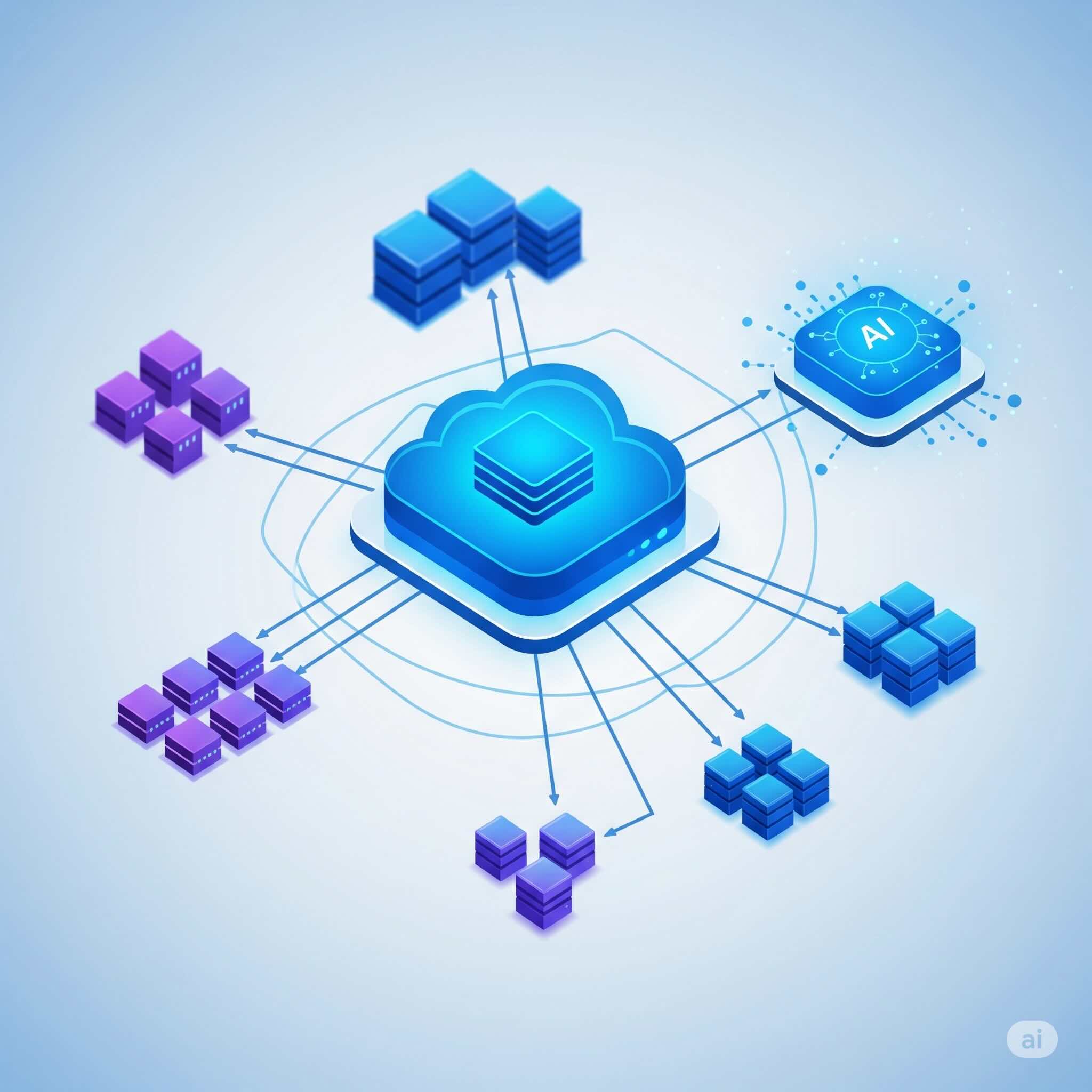
Cloud, Edge, and Hybrid: Choosing the Right Infrastructure for Your AI Workloads
By Tom Lang on May 19, 2025
The transformative power of Artificial Intelligence (AI) is undeniable, but unlocking its full potential often hinges on a crucial decision: where will your AI workloads live? The landscape of modern IT infrastructure offers three primary choices – Cloud, Edge, and Hybrid – each with its own set of strengths and considerations. Making the right choice isn't a one-size-fits-all endeavor; it depends entirely on the unique demands of your AI applications, data, budget, and operational requirements. Let's dissect each option to help you navigate this critical decision.
1. The Cloud: Unparalleled Scalability and Agility
Public cloud platforms (like AWS, Azure, Google Cloud) have long been the go-to for AI development, and for good reason. They offer:
- Massive Scalability: AI model training, especially for large language models or complex deep learning, often requires immense computational power and storage that can fluctuate dramatically. The cloud's elastic nature allows you to scale resources up or down on demand, paying only for what you use. This eliminates the need for hefty upfront capital expenditure (CapEx) on hardware.
- Access to Specialized Hardware: Cloud providers offer a wealth of high-performance computing (HPC) resources, including powerful GPUs and TPUs, specifically optimized for AI workloads. This provides access to cutting-edge technology that might be prohibitively expensive or complex to manage on-premises.
- Managed AI Services: Cloud platforms provide a rich ecosystem of managed AI/ML services (e.g., AWS SageMaker, Azure Machine Learning, Google Vertex AI). These services abstract away much of the infrastructure management, allowing data scientists and developers to focus on model development and deployment rather than infrastructure headaches.
- Global Reach: For AI applications serving a global user base, the cloud's distributed data centers allow you to deploy models closer to your users, reducing latency and improving user experience.
However, the cloud isn't without its drawbacks:
- Cost Management: While the pay-as-you-go model is flexible, costs can escalate rapidly with large-scale, continuous AI workloads, especially when considering data transfer (egress) fees.
- Latency: For real-time inference or applications requiring sub-millisecond responses, data round-trips to a distant cloud data center can introduce unacceptable latency.
- Data Sovereignty and Compliance: For industries with strict regulatory requirements (e.g., healthcare, finance, government), storing and processing sensitive data in a public cloud might raise concerns about data sovereignty and compliance.
2. The Edge: Real-time Decisions and Data Locality
Edge computing brings computation and data storage closer to the source of data generation, at the "edge" of the network. For AI, this means deploying models directly on devices or local servers. Edge AI is gaining significant traction for applications where:
- Low Latency is Critical: Autonomous vehicles, industrial automation, real-time fraud detection, and smart city applications demand instantaneous decisions. Processing data at the edge eliminates the network latency associated with sending data to the cloud and waiting for a response.
- Bandwidth is Limited or Costly: In remote locations or environments with unreliable connectivity, sending massive amounts of raw sensor data to the cloud is impractical or expensive. Edge processing allows only filtered insights or critical alerts to be sent upstream, conserving bandwidth.
- Data Privacy and Security are Paramount: By keeping sensitive data localized on the edge device, organizations can enhance privacy and reduce the risk of data breaches during transit. This is particularly relevant for scenarios involving personally identifiable information (PII) or proprietary operational data.
- Offline Operation is Required: Edge AI systems can continue to function and make decisions even when internet connectivity is intermittent or unavailable, ensuring operational continuity in critical applications.
The challenges of edge AI include:
- Resource Constraints: Edge devices typically have limited compute, storage, and power compared to cloud data centers. This necessitates highly optimized AI models and efficient inference engines.
- Management Complexity: Deploying, updating, and monitoring AI models across a distributed fleet of edge devices can be significantly more complex than managing centralized cloud deployments.
- Upfront Costs: While operational costs might be lower, there can be significant upfront investment in specialized edge hardware.
3. Hybrid: The Best of Both Worlds?
A hybrid infrastructure strategy combines elements of both public cloud and on-premises (which can include edge) environments, allowing organizations to strategically place AI workloads where they make the most sense. This approach aims to leverage the strengths of each model while mitigating their weaknesses:
- Optimal Workload Placement: Sensitive data or latency-critical inference can remain on-premises or at the edge, ensuring control, compliance, and real-time performance. Computationally intensive tasks like large-scale model training or data processing for less sensitive data can be burst to the public cloud for scalability and access to specialized resources.
- Cost Optimization: By intelligently distributing workloads, organizations can optimize costs. For instance, stable, predictable AI workloads might be more cost-effective on-premises over the long term, while burstable or experimental workloads can leverage the cloud's elasticity.
- Enhanced Security and Compliance: Hybrid models allow organizations to maintain stringent control over sensitive data on-premises while still benefiting from the cloud's advanced AI capabilities for other tasks, facilitating compliance with regulatory requirements.
- Flexibility and Resilience: A hybrid approach provides greater flexibility to adapt to evolving business needs and offers enhanced resilience by distributing risk across multiple environments.
However, hybrid strategies introduce their own complexities:
- Integration Challenges: Seamlessly integrating disparate on-premises and cloud environments for data flow, workload orchestration, and security can be technically challenging.
- Management Overhead: Managing a hybrid environment requires expertise across both cloud and on-premises technologies, potentially increasing operational complexity.
4. Making the Right Choice: A Decision Framework
To determine the ideal infrastructure for your AI workloads, consider these factors:
- Workload Requirements:
- Training vs. Inference: Training often demands massive, burstable compute (cloud excels). Inference can be real-time and low-latency (edge or on-prem excels) or batch-processed (cloud excels).
- Predictability: Are your AI workloads consistent or highly variable? Cloud offers elasticity for unpredictable demands.
- Data Characteristics:
- Volume and Velocity: How much data are you generating, and how quickly?
- Sensitivity and Compliance: Does your data fall under strict regulatory requirements?
- Data Gravity: Is your data already residing somewhere specific? Moving large datasets can be costly and time-consuming.
- Latency Requirements: How quickly do your AI applications need to respond? Real-time means edge or on-prem.
- Security and Governance: What are your organization's security policies, and what level of control do you need over your infrastructure and data?
- Cost Model: Are you looking for CapEx (on-prem) or OpEx (cloud)? How predictable do you need your long-term costs to be?
- Existing Infrastructure and Expertise: What are your current IT capabilities, and what existing investments do you need to leverage?
Conclusion:
There is no universal "best" infrastructure for AI workloads. The optimal choice is a strategic one, a careful alignment of your AI initiatives with the most suitable technological foundation. By thoroughly evaluating your specific needs against the unique advantages and disadvantages of cloud, edge, and hybrid environments, you can build a resilient, efficient, and future-proof infrastructure that truly empowers your AI strategy to thrive. The future of AI is distributed, and understanding where to place your intelligent agents will be key to unlocking their full potential.
← Back to Our Insights