

AI-augmented technical due diligence: technical and AI risk, sized in writing

Technical due diligence · for investors, acquirers and founders

For investors and acquirers (buy side)

  • One relationship, a repeatable read across your whole portfolio. The same method and the same risk categories every time, so you can compare companies.
  • Depth and speed a traditional audit can't match. AI reads everything, not a sample, and a senior CTO interprets it.
  • AI risk is a new line item. Is AI-written code reviewed and owned by a human? Are licenses known, including model weights? Are AI vendor terms set so proprietary code wasn't retained or used for training? Is anyone accountable for AI standards?
  • Output: a written risk register ranked by severity and cost to fix, an architecture and team assessment, and the questions to put to management.

→ How investors spot technical risk in a portfolio company, before it's expensive

For founders preparing for a raise or sale (sell side)

Technical risk is the last thing to show up in the numbers and the first thing a buyer's diligence team finds. A risk you find and fix quietly is worth far more than one the buyer finds for you.

  1. Read the leading signals: forecasting, key-person risk, reliability, deferred security, leadership depth, AI risk.
  2. Size the risk in writing with the AI-Augmented Technology Diagnostic (about a week).
  3. Assemble what acquirers now ask for on AI: development records showing human review, a license inventory, AI vendor terms, a written AI-use policy, and governance evidence.
  4. Fix the deal-blockers first: key-person risk, then the security gaps a buyer will test, then review discipline on AI-written code.
  5. Prepare the technical story the founder tells in the room.

→ Who owns your AI-written code? What acquirers will ask

What diligence now asks about AI-built code

AreaWhat a buyer looks for
Human contributionSource-control history, review evidence and modification records on material code
LicensesOpen-source code, datasets, model architecture and model weights, each with its obligations
AI vendor termsBusiness terms and data-retention settings showing proprietary inputs weren't logged or used for training
Training dataProvenance for any model the company trained or fine-tuned
Policy and governanceA written policy on AI use in production, an inventory of AI systems, named owners, and evidence of human oversight

This is a technical checklist, not legal advice. Ownership and licensing questions belong with your counsel.

A worked example you can open

I ran a full diligence packet on my own AI-built product: architecture, security, database, code quality, known limitations, and IP and licenses, with the methodology behind every number. It's the same kind of packet I'd produce for your portfolio company. → The receipts

(Pilot for Trades: R&D build · never released · no customers — by design. Architected to SOC 2 controls — built to the controls, not audited.)

Why me

I've been on the inside of companies that went through acquisitions: Advertising.com, Videology and Levels Beyond were all later acquired. I've integrated engineering teams after deals, taken SaaS platforms through SOC 2 Type II, and built in regulated industries. I know what diligence finds because I've had to answer it. → About Tom

Frequently asked questions

Investing, acquiring, or getting ready to be diligenced?

Related reading

How Investors Spot Technical Risk in a Portfolio Company — Before It's Expensive feature image

How Investors Spot Technical Risk in a Portfolio Company — Before It's Expensive

By Tom Lang on October 5, 2026

You don't need to read code to spot a portfolio company headed for an expensive technical problem. The signals are all outside the codebase — and by the time they show up in the numbers, the problem is already costly. Here's how to read technical risk early, including the AI risk most people aren't reading yet — without commissioning a full audit.

Read more

Who Owns Your AI-Written Code? What Acquirers Will Ask feature image

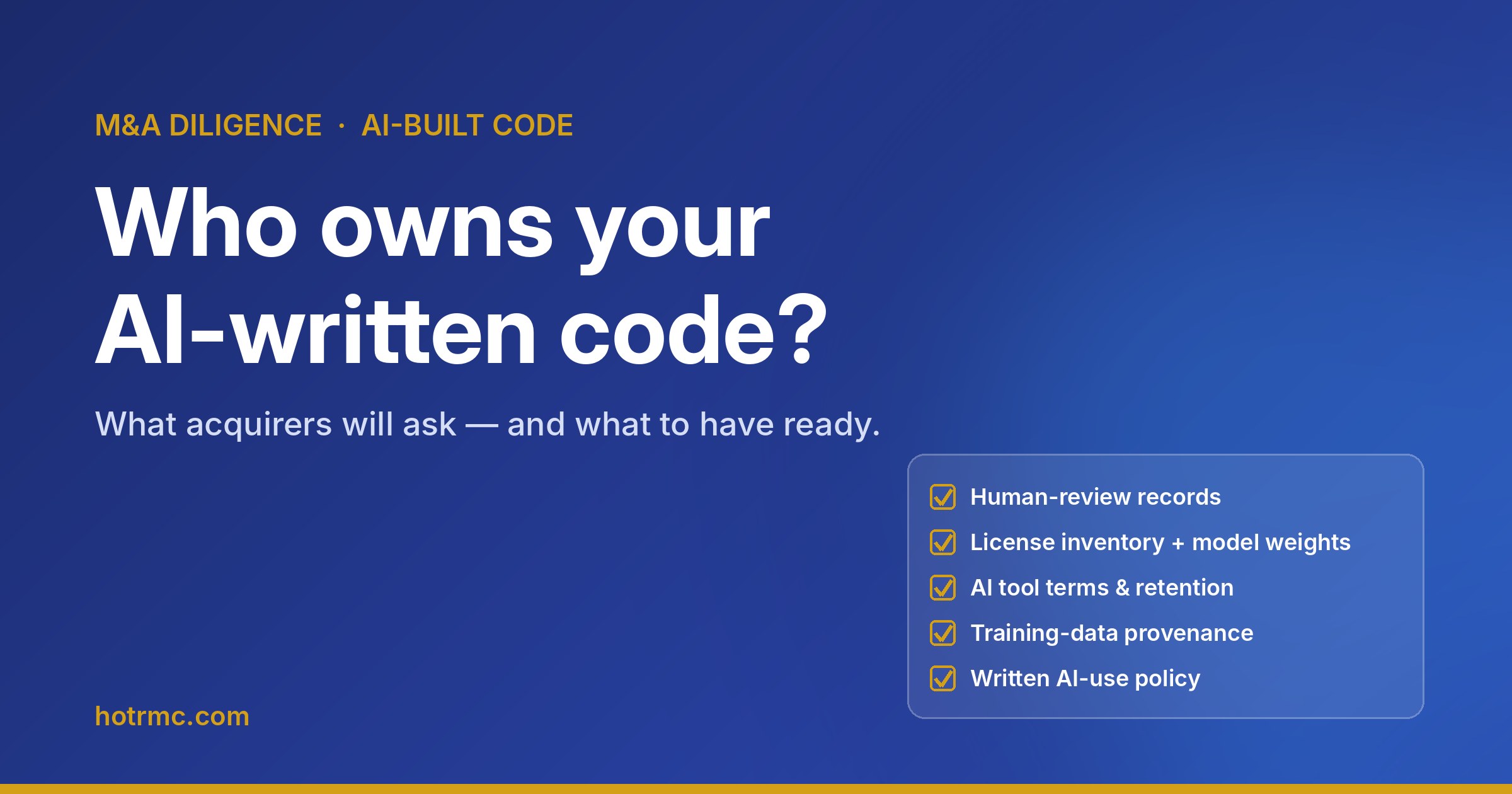
Who Owns Your AI-Written Code? What Acquirers Will Ask

By Tom Lang on November 2, 2026

Buyers have started asking a question most engineering teams can't answer yet: who actually owns your AI-written code? Ownership isn't automatic, and diligence now asks for records of human review, a license inventory that includes model weights, your AI tools' data-retention terms, and governance evidence. Here's the five-part checklist to have ready before the data room opens — and why it's cheap to prepare now and brutal to reconstruct later.

Read more
Red Flags I Look For in a Codebase and Team feature image

Red Flags I Look For in a Codebase and Team

By Tom Lang on September 16, 2026

When I run a Diagnostic, I'm not hunting for bad code — code can be refactored. I'm hunting for systemic organizational rot: the behaviors and structural flaws that quietly paralyze a business. Here's my actual priority list of the red flags I scan for first, the tell for each and what it predicts — plus the single most dangerous flag, and the one founders brag about that terrifies me most.

Read more
Integrating Engineering Teams After an Acquisition feature image

Integrating Engineering Teams After an Acquisition

By Tom Lang on September 16, 2026

The instinct after an acquisition is to immediately merge databases and consolidate cloud providers to show cost savings. That instinct destroys value. Mergers don't fail on incompatible tech stacks — they fail on mass attrition and severed context. Here's how I actually run an engineering integration: what I secure on day zero, what I integrate versus deliberately leave separate, the 90-day sequence, the cultural landmines that sink most deals, and the scar that taught me the one rule I never break.

Read more
The 5 Signs Your Engineering Is Quietly Burning Your Runway feature image

The 5 Signs Your Engineering Is Quietly Burning Your Runway

By Tom Lang on October 5, 2026

Engineering rarely fails loudly. There's usually no single disaster — just a slow leak that looks like 'busy' right up until it looks like a crisis. Here are five signs, in business terms, that your engineering is costing you more than it should — and what each one actually signals. None of them are really code problems; they're judgment problems.

Read more